
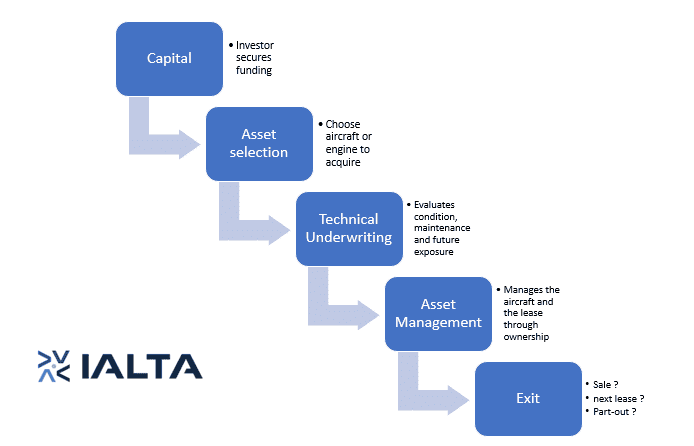
After many years involved in the technical side of aviation “Technical Underwriting” is not a term that I would have used a lot but is one the Financial sector would use more frequently to define our role in assessing the aircraft and engines technical condition, maintenance exposure and risks to determine the impacts on asset value, investment returns and future marketability.
Our image below reflects the investment lifecycle of an aircraft, you can see that Technical Underwriting is a key feature in the process however you could argue that after funding has been secured then technical underwriting begins so as to inform asset selection. It is also worth noting that technical expertise is relevant at every stage of the process.
Technical data is increasingly valuable, investors need accurate information about FH/FC, maintenance forecasts, engine conditions, lease return conditions and asset history to support investment decisions.
Deal teams in the lessors need to work closely with Technical on any potential transactions.
Technical Records as well as providing regulatory documentation also provide evidence of maintenance history, condition and compliance, which will influence an asset’s value and the risks a buyer is willing to accept.
To conclude, in my world there are two sides to an aircraft investment Financial and Technical.
Financial – Purchase Price, Lease Rentals, Financing costs, Airline credit, Residual Value.
Technical – FH/FC Utilisation, Engine Condition, LLP remaining life, Maintenance status, Records compliance.
In the Finance side of Leasing or a Technical Data Analyst, check out our technical records courses and learn how the documents preserve the asset value.